In the midst of a complicated discussion with my B&B landlady about access rights to her business my phone pinged. It was Emma. I'd obviously missed her first message of an hour ago and this second had me in a flat panic.
"Are you standing me up?"
It was now ten thirty and I'd been totally engrossed in my conversation with my landlady.
I'd arranged to meet Em at nine thirty at the cafe. Christ, this was not the best start to my day!
Rewinding a little to last night, our evening had gone along really well and I'd decided that I would skip my route to Clova and Tarfside, to instead have some lovely company, which had been sadly lacking so far on this walk, and take it easy to Tarfside via Gelder Shiel and the Shielin of Mark. Of course there was the matter of my room that I'd booked and paid for at Clova but I then bumped into Tim from Manchester who was himself about to set off up to Callater Lodge and then Clova. We agreed that the room was his for free. He gladly accepted to take my place and prepared himself for a session on the rack to stretch himself to six feet with impossibly skinny legs.
So that was that; I could now grovel profusely at my appalling time keeping and bad manners and settle down to a decent lunch in the cafe with Emma. Of course I had dived down to the cafe without packing and so I had to drag the poor girl back to my room so she could watch me shove my life support system into an impossibly small rucksack. Finally we set off for what for me should be three fairly easy days in delightful company.
Experienced Challengers may well have spotted a really, really bad mistake here. But enough of that for the moment, we'll get back to it later.
FOOTBRIDGE OVER THE FALLS OF GARBH ALLT
After the delights of the A93 to Ballater, the Ballochbuie Forest comes as calming respite. In here you're unlikely to be barged off the road by coaches full of pensioners who are generally younger than most Challengers. There are no startling car horns or angry fists waved by motoristas in their warm and comfortable cars, listening to beautiful music as you plod with the world on your shoulders facing death at every bend in the road.
That's not to say that you won't meet any traffic in the forest; In the past I have come across a pair of beautifully polished dark green Range Rovers, purveying the Royal Protection Squad and Liz herself; both vehicles' occupants equally polite and charming. Over the last few weeks I've wondered what the boys in their Airforce Blue or Army Green jumpers have made of Harry's recent spat with his family?
Back in our world for a moment, I noticed that Emma, rather foolishly in my opinion, had her maps stowed and was actually allowing me to navigate our way through this perilous landscape. I took my chance and offered her delights beyond anyone's wildest imaginations. I led her, blindfolded, up a route steeper than was strictly necessary to the historic bridge over the Falls of Garbh Allt. I spun her around three times, removed her blindfold and introduced her to Queen Victoria's favourite skinny dipping pool.
TODAY'S ROUTE: RIGHT-CLICK TO ENLARGE IN A NEW WINDOW
Distance: 16.0 km
Ascent: 320 m
Swearing her to the location's secrecy, she climbed aboard the hallowed footbridge to be photographed for posterity.
EMMA, STOOD UP?
While admiring the beauty of our surroundings a well-heeled family arrived, out for a ramble. Had we met on the high street I doubt if we'd have exchanged more than a polite 'good afternoon' but out here there was freedom to welcome each other as friends and offer to take each other's group photos. The great outdoors, eh?
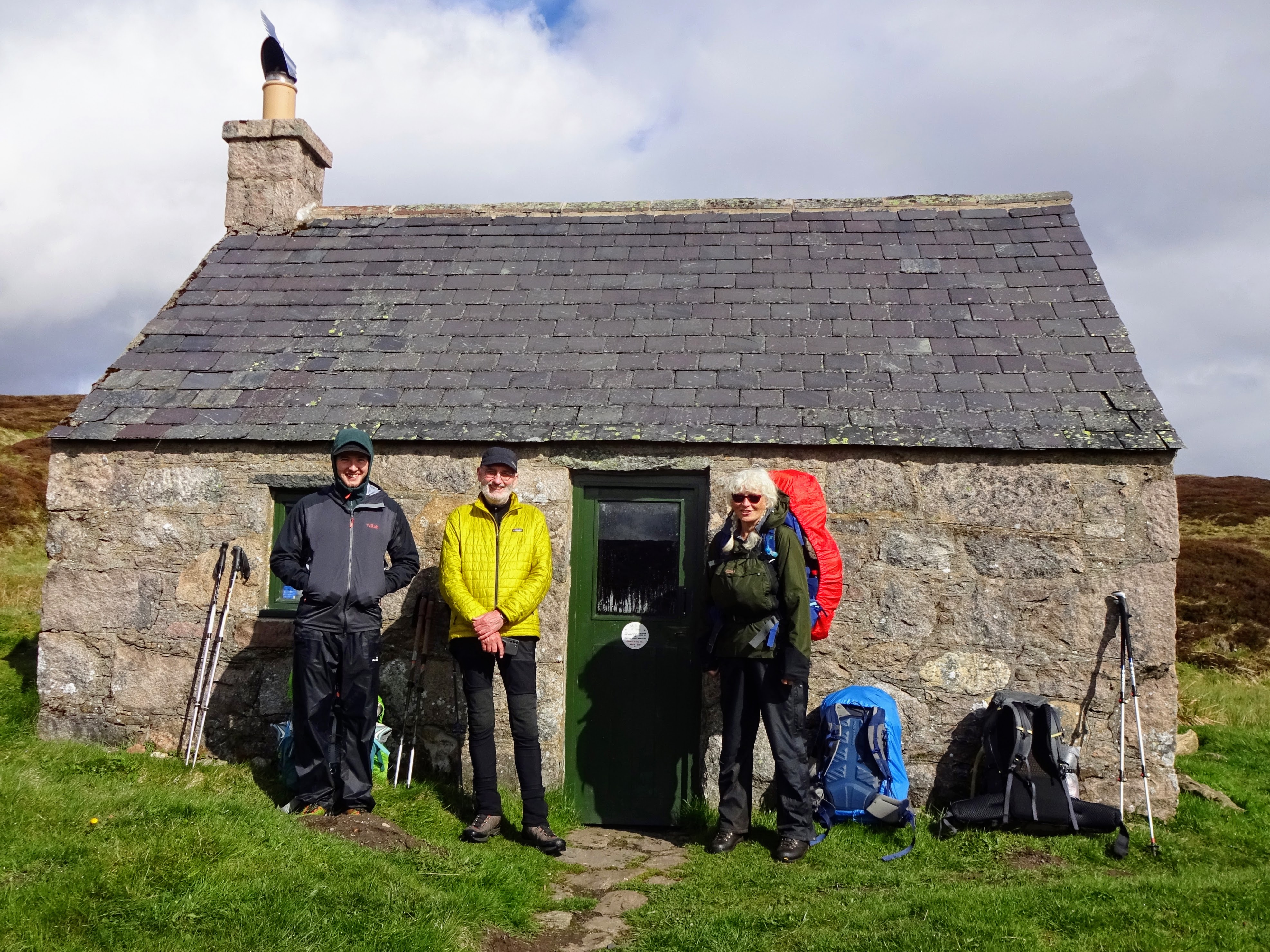
For the remainder of the afternoon we strolled through the Balmoral Estate to Gelder Shiel, dodging fierce showers and a biting wind. Arriving at our destination there was a very well pitched little green tent sheltering in the lee of the royal bothy, belonging to Paddy - a lovely chap I've known for quite a few years. Emma had walked with Paddy for a few torrid days earlier in her Challenge, that had involved drenching rain and hazardous river crossings. We spent a friendly evening together with the bothy stove glowing warmth and happiness.
DAY ELEVEN, MONDAY: GELDER SHIEL - SHIELIN OF MARK
With Paddy away early on his day to Tarfside, two sluggards finally woke, slowly easing their bodies into the bone cold bothy, the stove having given up its life giving glow in the night. Accusations of snoring were brushed aside, neatly passed on to the departed Challenger who had nothing to say in his defence.
We were finally on our way mid morning, with a fine ramble up to the Shielin of Mark, or possibly beyond if the spirit were to take us, as our planned itinerary. But first, snaps of our overnight halt:
ME, GELDER SHIEL BOTHY
EMMA
Below, as is customary, is the map of our route but this time exhibiting two days of walking, as the map format allows and also as today's walk is but a mere stroll of some nine miles with around nineteen hundred feet (for those of a delicate pre-metrication age) of ascent, to be achieved in two gargantuan struggles. With thirty four successful Challenge crossings under the team's belts we thought this would go.
DAYS ELEVEN & TWELVE. RIGHT-CLICK TO ENLARGE IN NEW WINDOW
Day 11: Distance 14 km Day 12: Distance 19 km
Ascent 570 m Ascent 300 m
I do hope that you did as suggested and right-clicked on the map to blow it up to an impressive size in a fresh window, as there may well be questions at the end of this entry. You surely wouldn't want to stay back after class, would you?
VIDEO PANORAMA FROM GELDER SHIEL, FEATURING A FAIRY QUEEN
A great deal of effort is being made within the Cairngorm National Park - and beyond - to encourage natural regeneration of native tree species. At this location you'll have noticed from the video that fencing has been erected to ward off nibbling predators. I'm not sure how effective it is against deer, as I've seen them clear obstacles like this in one balletic leap. Perhaps a wiser reader could enlighten me in the comments section?
Once the heathery bash to the Rover Road is over, the rest of the morning is plain sailing, albeit in a decidedly uphill fashion, with glorious views of the Lochnagar group.
LOCHNAGAR - MEIKLE PAP TO CAC CARN BEAG. *DO* RIGHT-CLICK TO ENLARGE!
EMMA AND THE LOCHNAGAR GROUP: RIGHT-CLICK TO ENLARGE
ME, TAKING A BREAK ON THE STUMBLY TRACK DOWN TO GLEN MUICK
Leisurely breaks were a thing today, despite the very keen breeze, as the day was rain-free and fabulous views were in abundance with ragged cloud formations scudding across horizons. The often tricksy beast of a river crossing on the way down to Glen Muick was but a gurgling infant.
By a late lunchtime we were ensconced in the bosom of the Glen Muick Visitor Centre, being served hot drinks and snacks by the wonderful Warden, learning of the recent changes in Braemar's cultural life and the internal politics brought about by the sudden influx of comparatively massive wealth. All is not as it seems on the surface; a situation not too dissimilar to that depicted in the film 'Local Hero'.
Happily, we were joined by Lindsay and her son Grant, so we could linger in the warmth and shelter a little longer.
EMMA, COSY AT THE VISITOR CENTRE
I love the stroll up the Allt Darrarie, and the little grunty bit to join the Burn of Mohamed, to bear right following the caochan towards the shooting butts. They point nicely to the Shielin, so keep them in view, taking the grassiest route over the low saddle and you'll arrive bang on the Shielin as if by magic.
Are we going to carry on? Perhaps to the Stables of Lee? What time is it? Five o'clock, so of course not. The Shielin of Mark now has generously sized bunk beds, each with a fairly decent extra wide closed-cell Thermarest for a little touch of luxury. Graham decided to camp outside but Lindsay and Grant claimed comfortable berths as well. Lindsay set-to, arranging the kindling and rubbish to start a small fire in the grate. It was all friendly and snug.
I adore everything about the next picture; the lighting, the characters that seem to epitomise the Challenge - two first-timers and an old hand creating a perfect cradle for friendship. Out of shot are two more Challengers simply glad to be enjoying life again. We're all out in the hills, perhaps miles from anywhere but at the very centre of happiness.
A BEAUTIFUL PARCEL OF ROGUES: GRANT, GRAHAM & LINDSAY (THE FIRE-STARTER), AT HOME AT THE SHIELIN OF MARK
DAY TWELVE, TUESDAY: SHIELIN OF MARK - TARFSIDE
It's best to get the recriminations over with at the start of the day. Which Challengers were snoring all night long? There were two of the bastards but in the crow black, bible black night in the shielin it was impossible to pin the blame. To a man, all present feigned injured innocence.
Before long I realised that I was to be tail-end-Charlie in the packing up stakes. As I was fumbling with my bootlaces the bothy door swung open, accompanied by an icy blast.
"You must be Alan Sloman"
Could it be the canary yellow jacket? Perhaps the pipe-cleaner legs? No, it had to be the balding cranium that's so recognisable. Looking up from my uncomfortable crouch I enquire of the gentleman's name and plead for the door to be shut pretty smartly as I'm a sensitive soul and it's freezing out there. There's unnecessary apologies - I'm being grumpy - and I'm introduced to the genial Chris Vardy, resplendent in neckerchief and woggle. Unfortunately he doesn't stay for long and heads off into the Arctic, probably never to be seen again.
GRANT, ME & LINDSAY AT SHIELIN OF MARK
EMMA, GRANT & LINDSAY
The obligatory team photos are taken, about a dozen times with each of everyone's cameras and smartphones before we can depart for the lurid fleshpots of the Tarfside Metropolitan Conurbation.
Over the years I've found the easiest way over Muckle Cairn is to follow the caochan South Grain to collect the track that runs along the ridge before heading down into Glen Lee and the potentially feisty fording of the Burn of Badrone.
LINDSAY WITH LOCHNAGAR AS A BACKDROP
YOU DON'T GET A VIEW LIKE THIS IN BERKSHIRE. RIGHT-CLICK TO ENLARGE
LINDSAY & EMMA, ATOP MUCKLE CAIRN
EMMA IN A COLOSSAL PLACE: RIGHT-CLICK TO ENLARGE
It was as I hit the track on the ridge that I noticed Emma, who was a little distance behind, on account of receiving all manner of texts and voicemails as her phone sprang into life, was waving and shouting in my general direction.
"TURN ON YOUR PHONE!"
Unengaging 'aeroplane mode' produced a startling number of texts and voicemails. By the time the stream of electronic media had finished, Emma had caught up and advised that I should listen to them, pronto.
To my eternal shame, I had received texts and voice messages from the various good people manning Challenge Control in Montrose. It had transpired that on Monday evening, upon my non-arrival at the Clova Hotel (Tim had decided not to take up the free room) that the hotel had very sensibly called Phil (who had arranged the booking of a twin room for us both) to enquire if we still needed the room. It was now Tuesday morning.
Now Phil, some five hundred miles to the south of us, astride the battlements of Lord Elpus Hall, was concerned.
"It's not like Al to spurn a comfy bed in a warm hotel with white fluffy towels and lashings of hot water? Something might have gone awry!"
Very sensibly Phil phoned Challenge Control to let them know of my non-appearance at Clova. The smooth machine that is Challenge Control and all the highly experienced folk that make up that team, slipped into gear: This fella has various health-limiting conditions. He's getting on a bit. He's not missed a phone-in-point before in all his Challenges. They were concerned. Perhaps a great deal. Of course, text messages and phone calls were never going to make it through to the Shielin of Mark and so I was blissfully unaware of the problems I had caused.
I texted back to Control that I was in fact quite well. It was absolutely freezing on top of Muckle Cairn and so I decided that we ought to press on and sort it out, and grovel profusely for forgiveness when at Tarfside.
Of course, all this could have been so easily avoided had I simply called in to Challenge Control when at Braemar and explained that I was changing my route, and then called the Cloval Hotel to let them know that someone else would be taking my already-paid-for room.
Hindsight's a wonderful thing, but I had caused unnecessary alarm in Montrose, with the team phoning around other Challengers taking similar routes to discover my whereabouts, and Sue (one half of the Event Organisers) having a sleepless night worried about a complete idiot.
You will not believe how appalled I was (and still am) and deeply sorry for this gross oversight.
GRANT HEADING DOWN INTO GLEN LEE: RIGHT-CLICK TO ENLARGE
TO GLEN LEE
GRANT'S PICTURE OF THREE VISUALLY IMPAIRED CHALLENGERS
AT INVERMARK CASTLE
LINDSAY HEADING TO TARFSIDE: RIGHT-CLICK TO ENLARGE
Emma and I made Tarfside in reasonable time, but not in time to bag rooms, so we hoisted the shelters up on the playing field and headed to St Drostan's for coffee and cake.
RESIDENT PHOTOGRAPHER, IAN AT TARFSIDE: DID I PUT FP4 OR HP5 IN THERE?
GRANT
LINDSAY
VICKY
ALVAR, MANNING ST. DROSTANS, TARFSIDE
Alvar was his usual gentlemanly calm self, and quietly let me know that those manning Challenge Control in Montrose had been seriously worried about me and that I should make a bit of effort at contrition when I saw them in Montrose. He's a lovely man; vastly experienced, non-judgemental, kind and caring.
TARFSIDE PLAYING FIELD. RIGHT-CLICK TO ENLARGE
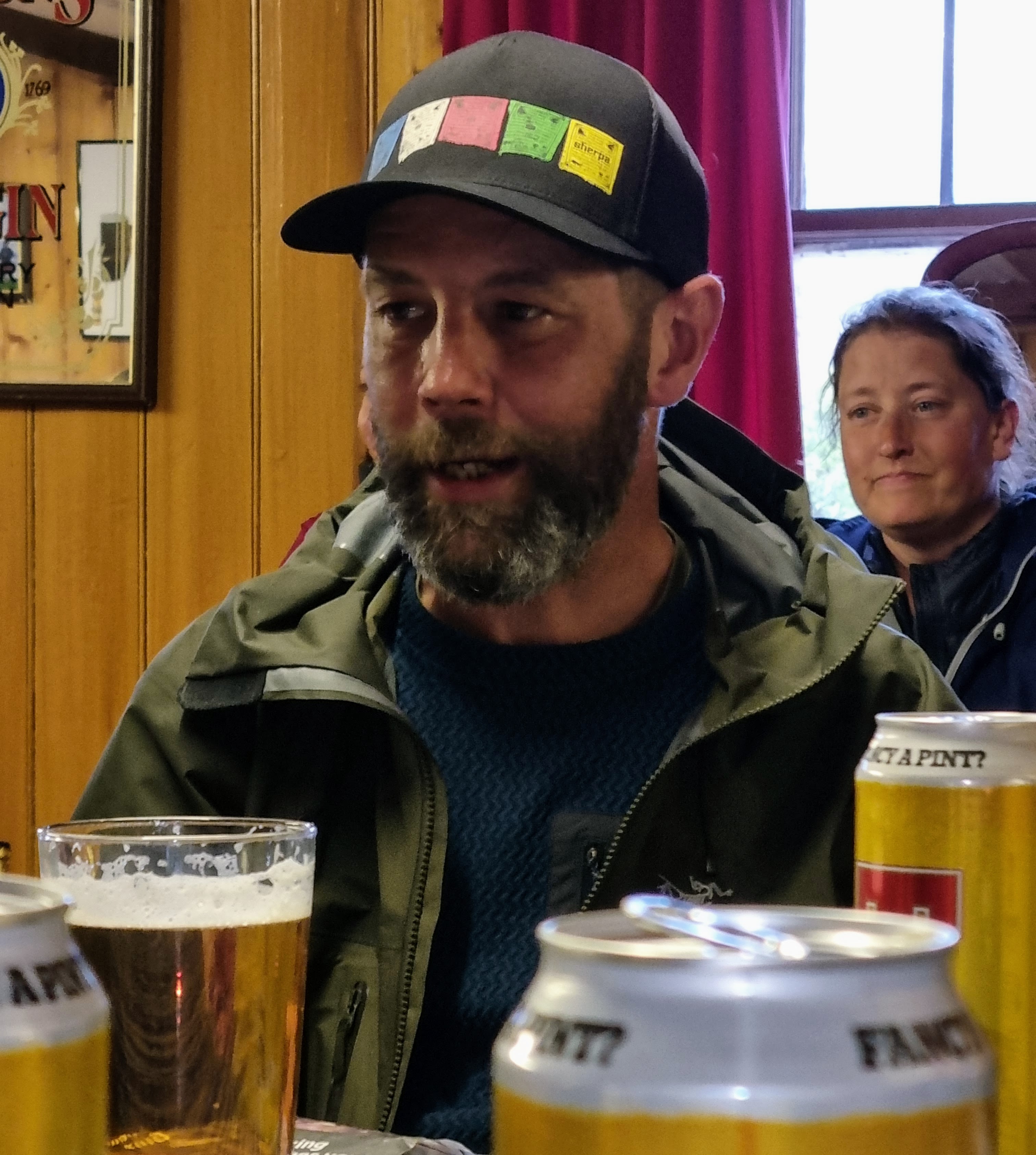
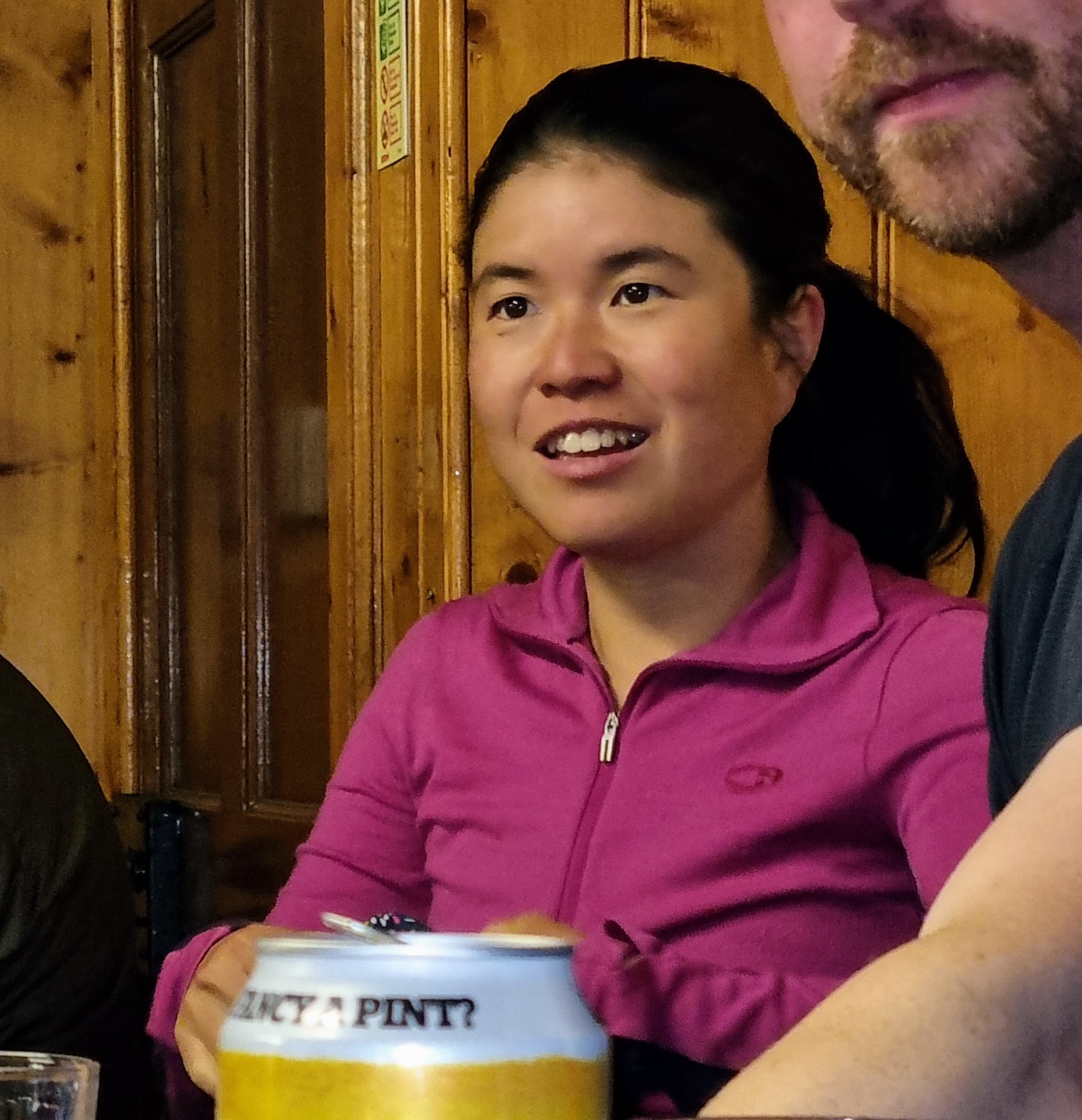
We spent the evening in the Masons with all manner of Challengers that came in all shapes, genders and sizes. Everyone was having a splendid time and the Masons had put on a barbeque with the best tasting burgers south of the North Pole. I had quite a few of those, along with a few beers and coffee as well! I'm getting soft in my dotage.
TARFSIDE, THE MASONS
A SUCCESSFUL 50 MUNROS TRIP FOR CARL & JURAJ
HARDENED PROS RICHARD & PETER WITH A LOVELY NEWBIE, DEAN 😊
TIM
ANDY, ON HIS TENTH, HAVING COMPLETED THE 4000's
GRANT, DOING HIS 'CLINT EASTWOOD IMPERSONATION
DEAN READ - A BIT OF A STAR - CLICK ON THE LINK FOR A CORNUCOPIA OF OUTDOOR ADVENTURES
EMELIE
After a wonderful evening hosted yet again by the magnificent Masonic Lodge, we staggered off to our shelters or St Drostan's, very smiley Challengers to sleep soundly. Apart from the realisation of my dreadful oversight, this had been a perfect Challenge day, in wonderful company.


.jpg)